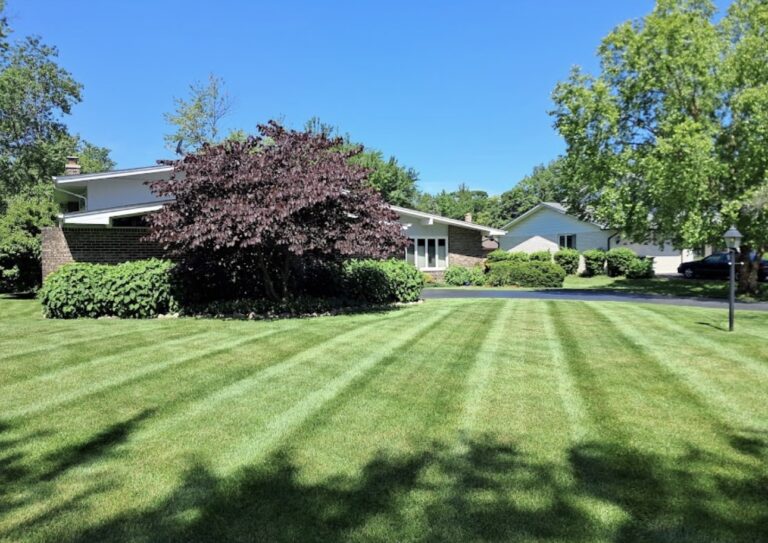
Most lawns in the southwest suburbs are cool-season grasses like Kentucky bluegrass. They keep growing slowly through fall and go dormant once the ground gets cold. What you do in these last few weeks has a lot to do with how your lawn looks in April.
Here is the checklist we follow on our own maintenance properties.
1. Keep mowing until the grass stops growing
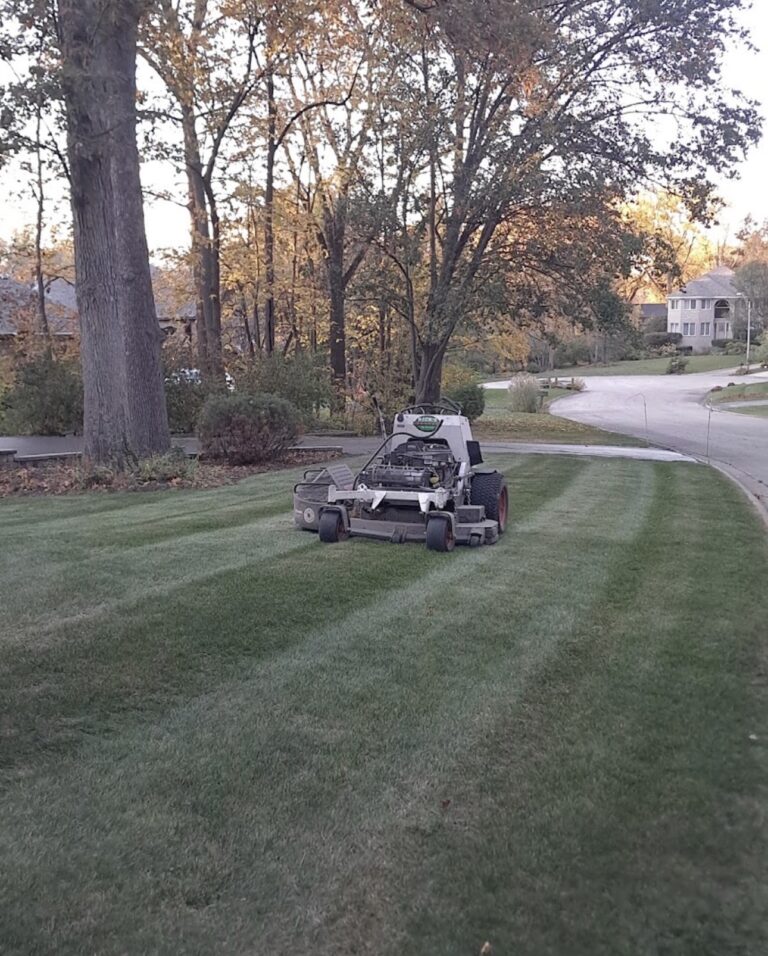
Do not park the mower too early. Keep cutting as long as the grass is growing, and lower the deck a little for the last one or two cuts. A final mowing height of about 2.5 to 3 inches helps prevent matting and snow mold, without stressing the lawn.
2. Get the leaves off the lawn
A thick layer of leaves blocks light and traps moisture, which can leave dead or moldy patches in spring. A light layer can be mulched with the mower. Anything heavier should be raked or blown off and hauled away. A fall cleanup is one of the most useful visits of the year. See what our fall cleanup service includes.
3. Give the lawn a late fall feeding
Fall is the most important time to fertilize cool-season lawns in Illinois. A late fall application, made after top growth slows but before the ground freezes, helps roots store energy for a faster green-up in spring. Our own lawn fertilization program runs from April to late September.
4. Clean up beds and add mulch where needed
- Pull weeds and remove dead annuals
- Cut back perennials that tend to flop or get diseased; leave sturdy ones with seed heads for winter interest if you like the look
- Top up thin mulch around shrubs and young trees, keeping it off trunks and stems
- Water evergreens planted this year if the fall has been dry, until the ground freezes
5. Check where your water goes
Late fall rain is a good time to spot drainage problems before snowmelt. Walk the yard during or after a storm. Look for downspouts that dump next to the foundation, water that pools in the same low spots, and soggy areas that never seem to dry out. A downspout extension is often an easy fix. Bigger problems are worth a look before spring.
Tip: take photos of standing water now. They are very helpful when you plan drainage work later.
6. Put the hoses and spigots away
Disconnect, drain and store garden hoses, and shut off and drain outdoor faucets if your home has an interior shut-off valve. Frozen hoses left attached can damage faucets and pipes.
7. Mark the edges of your driveway
Snow stakes along driveways and walks help whoever clears your snow avoid the lawn, beds and edging, and save you from repairing torn-up turf in spring.
8. Plan next year’s lawn improvements
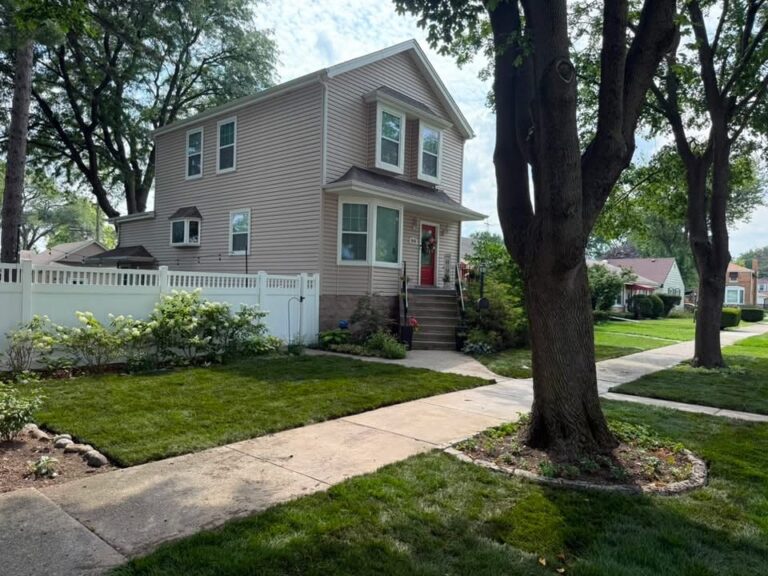
If your lawn is thin or patchy, the best time to fix it is late summer and early fall, when aeration and overseeding work best. If the lawn is beyond repair, new sod is a fast way to start over. Fall and winter are also a good time to plan a patio or landscape project so it is ready to build once the ground thaws.
Want help?
Our crews take care of lawns and landscapes across New Lenox, Lockport, Homer Glen, Mokena, Lemont and Frankfort. See our lawn maintenance service, or request a free estimate.